
If your home or cottage relies on a septic system, regular maintenance is one of the best ways to avoid backups, drainage problems, and expensive repairs. A septic tank works quietly in the background, but when it is ignored for too long, small issues can quickly turn into major system failures.
This guide explains what septic tank maintenance includes, how often your tank should be serviced, the warning signs that your system needs attention, and what homeowners can expect when it comes to maintenance costs.
Septic tank maintenance includes four core tasks: regular pumping, periodic inspections, managing household water usage, and avoiding materials that damage the system.
Septic Most systems should be inspected every 1–3 years and pumped every 3–5 years, though the right schedule depends on your household size, daily water use, and tank capacity. Staying consistent with these basics prevents system failure and keeps your septic system working properly for years to come.
However, the right schedule depends on several factors:
Household size. More people means more daily waste volume
Daily water usage. High-usage homes fill tanks faster
Tank size. Smaller tanks need more frequent pumping
Type of system. Conventional systems, aerobic systems, and mound systems each have different requirements
Seasonal use. Cottages or seasonal properties may behave differently than year-round homes
For example, a family of five with a smaller tank may need pumping every 2–3 years, while a couple using a larger tank seasonally might go 5–7 years between pumpings. Your septic service provider can help you establish the right schedule based on your specific setup.
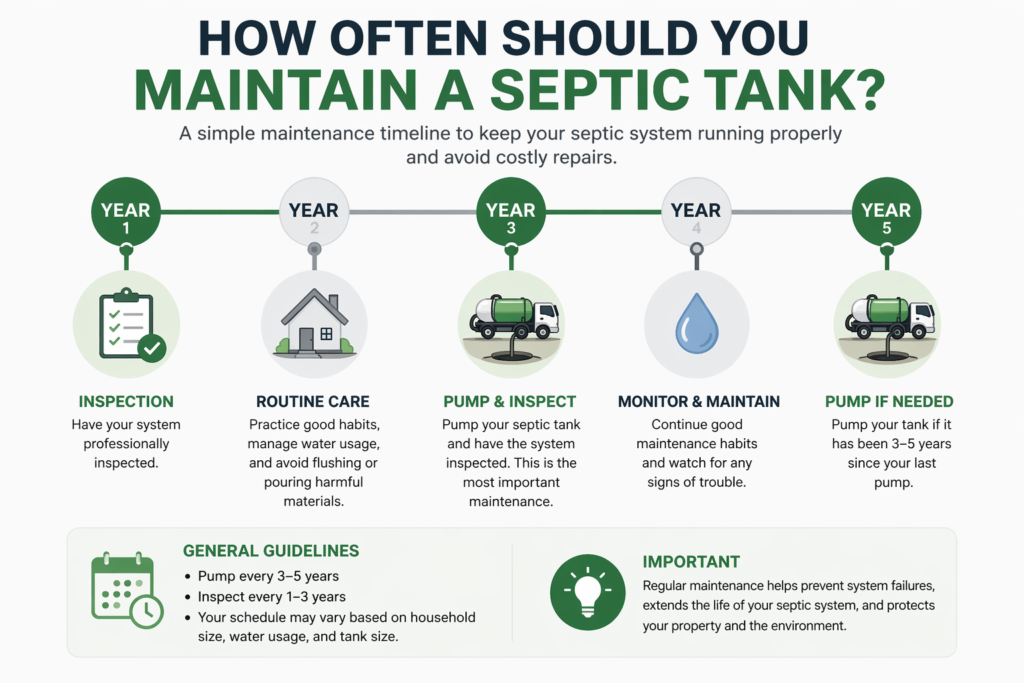
A septic system is one of the most critical and costly components of a property with no municipal sewer systems. Unlike homes connected to municipal sewage, everything depends entirely on how well your system is maintained.
Without proper upkeep, small issues escalate quickly into major problems: backups, drainage failure, or complete system replacement. Replacing a septic system in Ontario can cost anywhere from $15,000 to $40,000 or more depending on the size of the property and the type of system required. Regular maintenance, by comparison, is a minor investment.
Beyond avoiding problems, good maintenance also extends the working life of your system and protects the surrounding environment — especially important for properties near lakes, rivers, or wells.
Septic systems almost always give warning signs before a serious failure occurs. Catching these early can save you from much more expensive repairs.
Watch for these common indicators:
Slow-draining sinks, bathtubs, or toilets
Unpleasant odors inside the home or near the yard
Wet, soggy, or unusually green patches of grass near the septic bed
Gurgling or bubbling sounds coming from drains or toilets
Wastewater backing up into sinks, tubs, or floor drains
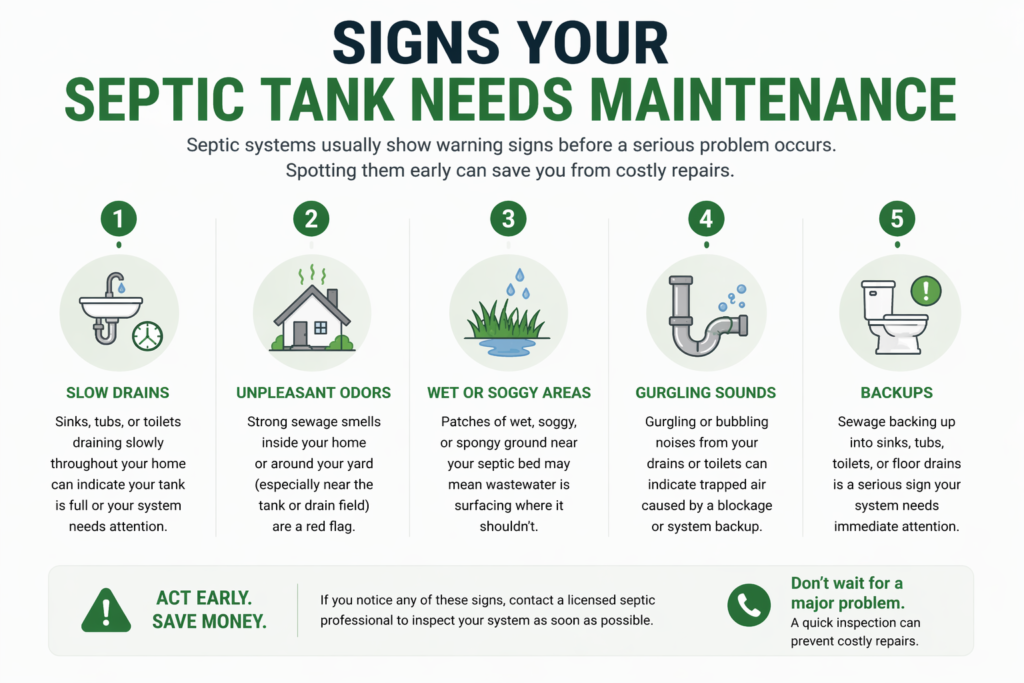
These signs often mean the system is overloaded, approaching full capacity, or experiencing a blockage somewhere in the line.
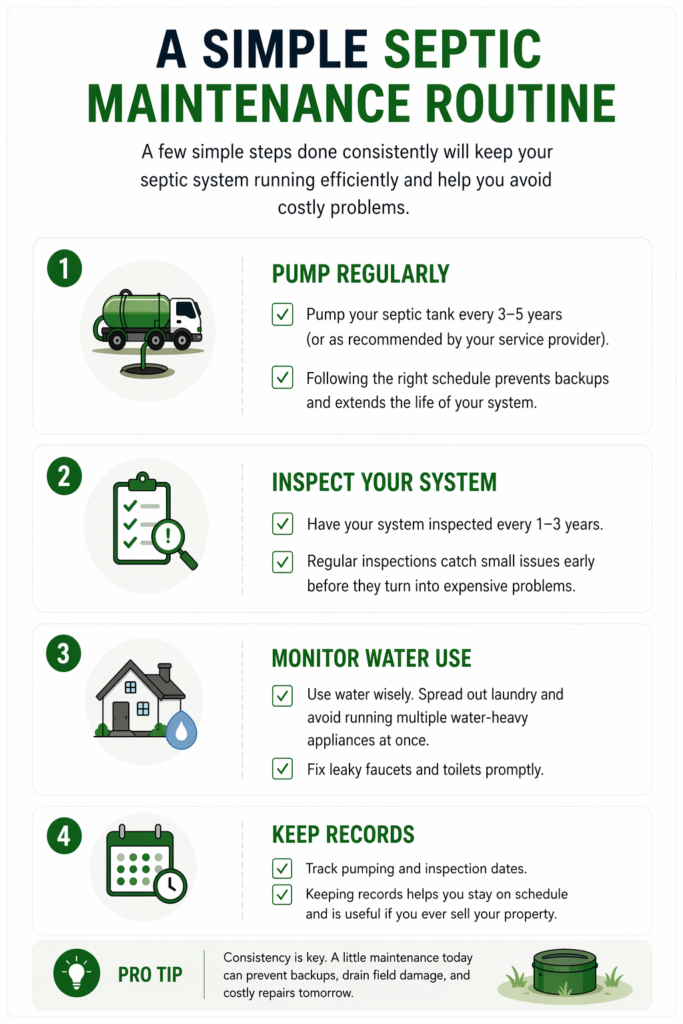
Maintaining a septic system doesn’t have to be complicated. The key is consistency — staying on schedule and being mindful of what goes into the system.
A practical maintenance routine includes:
Schedule regular pumping: book it every 3–5 years (or as recommended by your service provider)
Have the system inspected: especially before buying a property or if the system hasn’t been checked in several years
Monitor your household water use: spread laundry loads throughout the week, fix leaky faucets promptly, and avoid running multiple water-heavy appliances at once
Keep records: track your pumping and inspection dates so you always know when service is due
Keeping a simple log of service dates is one of the most overlooked habits among homeowners — and one of the most useful.
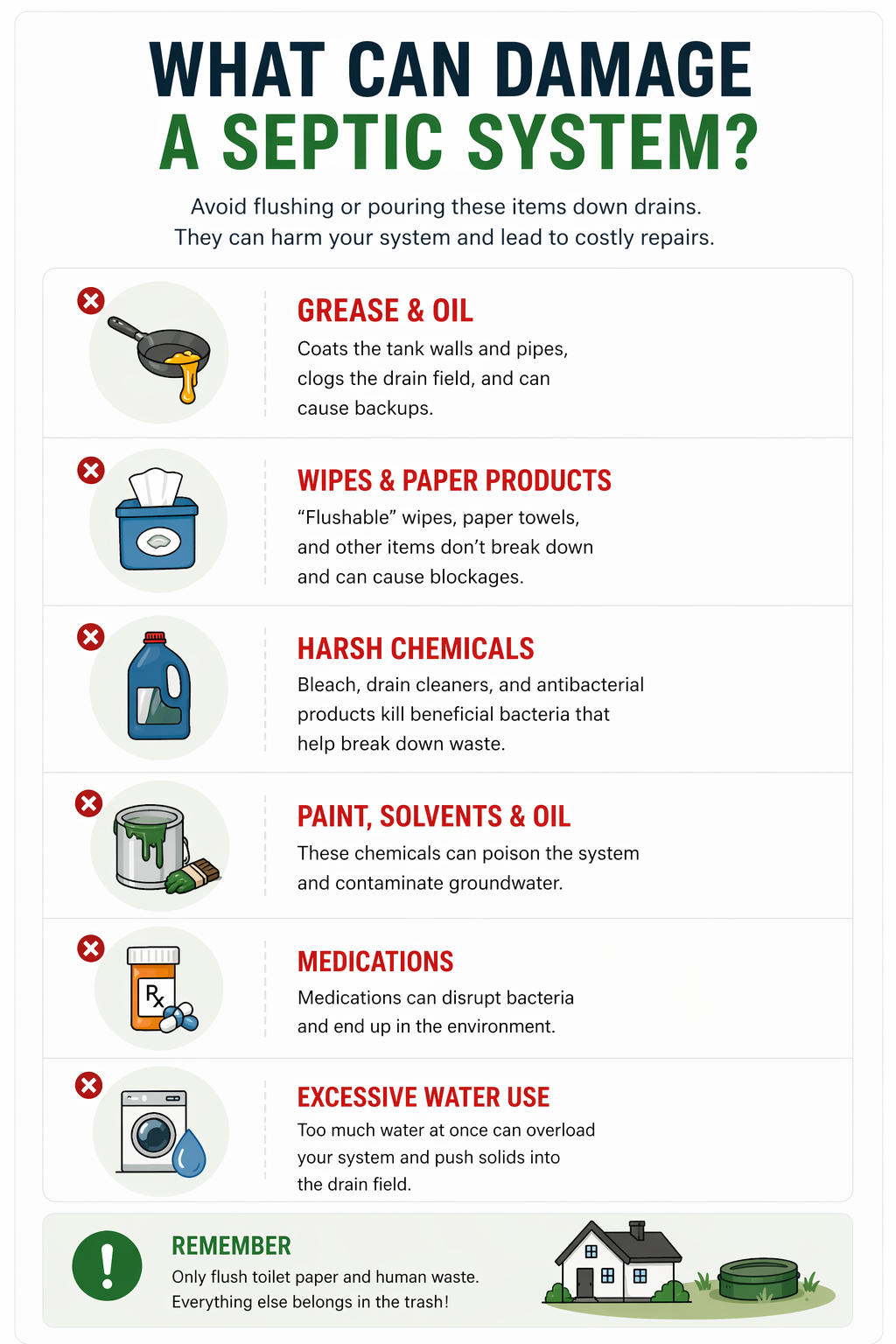
Improper usage is one of the leading causes of premature septic system failure. The bacteria inside your tank play a critical role in breaking down waste — and certain materials disrupt or kill that bacterial balance entirely.
Materials that harm septic systems:
Cooking grease and oil (coats the tank walls and clogs the drain field)
“Flushable” wipes, paper towels, and feminine hygiene products
Harsh chemical cleaners, bleach, and antibacterial soaps
Paint, solvents, motor oil, and other chemicals
Medications flushed down the toilet
Excessive food waste from garbage disposals
Even products marketed as “septic safe” or “flushable” can cause buildup over time. When in doubt, throw it in the trash.
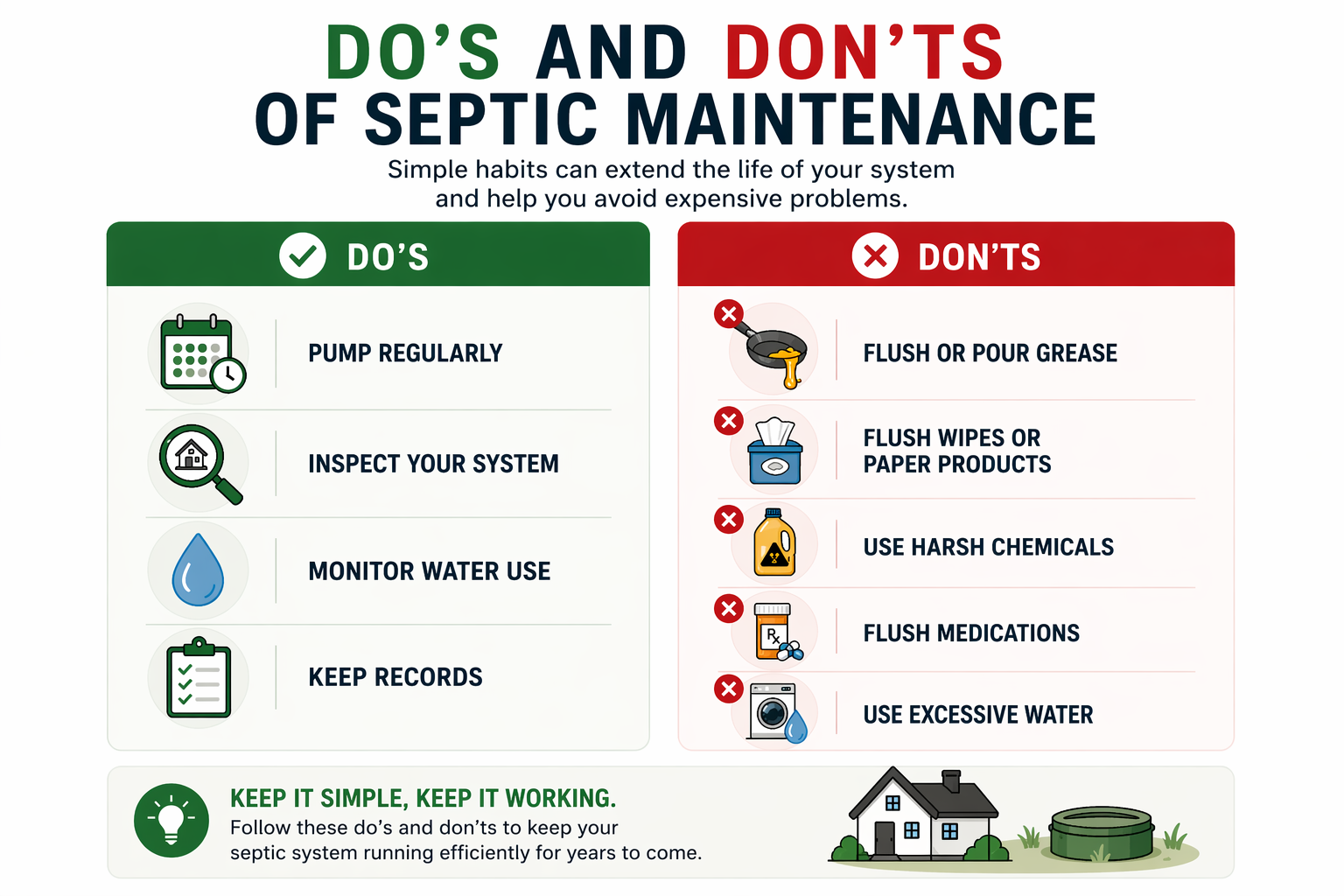
Keeping your system healthy often comes down to a few consistent habits.
DO:
Pump your tank on schedule
Spread water usage throughout the day and week
Use septic-safe or low-phosphate cleaning products
Keep records of all service visits
Divert downspouts and surface runoff away from the drain field
Have the system inspected when buying or selling a property
DON’T:
Flush wipes, paper towels, or non-biodegradable items
Pour grease, oil, or chemicals down any drain
Drive vehicles or heavy equipment over the septic system or drain field
Plant trees or large shrubs near the tank or bed (roots can damage components)
Ignore warning signs like odors, slow drains, or soggy ground
Use excessive amounts of garbage disposal — it adds unnecessary solids to the tank
Regular maintenance is a modest expense compared to the cost of repairs or full system replacement.
| Service | Estimated Cost |
|---|---|
| Septic tank pumping | $300–$800 |
| Routine inspection | $150–$400 |
| Minor repairs (e.g., baffle replacement) | $200–$600 |
| Full system replacement | $15,000–$40,000+ |
Costs vary depending on the size of your tank, the accessibility of your property, and the specific services required. Some providers offer combination pump-and-inspect packages at a discounted rate — worth asking about when you book.
The bottom line: paying a few hundred dollars every few years is far more manageable than an emergency repair or a full system replacement.
Ontario’s climate adds an extra layer of importance to regular septic maintenance. Cold winters, freeze-thaw cycles, and the heavy spring runoff season can all affect how a system performs.
For rural properties and cottages throughout Ontario — including areas around Kitchener-Waterloo, Wellington County, and cottage country — specific conditions to keep in mind include:
Frost depth. Pipes and tanks can freeze in unusually cold winters, especially on systems that see reduced winter use
Spring runoff. Saturated soil during spring can slow drain field absorption and temporarily overwhelm the system
Seasonal usage patterns. Cottages that sit unused for months and then experience heavy weekend use can stress the system more than steady year-round homes
Well proximity. Many rural Ontario properties have both a well and a septic system; proper maintenance protects both your wastewater system and your drinking water
Whether you’re due for a pump-out, noticing early warning signs, or just moved to a property with an unknown service history, getting professional eyes on your system is the smartest first step.
Our team serves rural homeowners and cottage properties throughout Ontario — with straightforward pricing, honest assessments, and no unnecessary upselling. Contact us today to schedule a septic inspection or pumping service.
Signs include slow drains throughout the house, sewage odors inside or outside, pooling water near the drain field, and unusually lush grass over the septic area. If you notice any of these, have the tank inspected or pumped promptly.
Occasional use of standard cleaners is generally fine, but avoid overusing bleach, antibacterial products, or drain cleaners in high concentrations. These can disrupt the bacterial balance inside the tank. Look for "septic-safe" products for everyday use.
Without regular pumping, solids build up until the tank overflows into the drain field. This can clog or saturate the leaching bed, causing expensive damage that may require full drain field replacement — sometimes costing more than replacing the tank itself.
With proper maintenance, a well-installed septic system can last 25–40 years or longer. The drain field is often the first component to wear out, typically after 20–30 years depending on usage and soil conditions.
Yes. Septic pumping is a routine outdoor service that typically takes 30–60 minutes and doesn't require you to leave your home.
Get in Touch!
Do you have an excavation, septic, or landscaping project in mind?
Request a quote!