
No Maintenance Records
Missing pumping or repair records makes the system’s condition harder to assess and may indicate inconsistent maintenance.
Buying a home with a septic system requires more than a standard home inspection. Because many septic components are buried underground, problems may not be immediately visible and can lead to costly septic repair work after you move in.
A professional septic inspection helps assess the condition of the system before closing, giving you a better understanding of its performance, maintenance history, and any potential issues.
In this guide, we’ll explain what a septic inspection includes, why it’s important, and what every homebuyer should know before purchasing a property with a septic system.
A septic inspection is a professional assessment of a property’s septic system to evaluate its condition, performance, and identify any existing or potential problems before you purchase the home.
Unlike a standard home inspection, a septic inspection focuses specifically on the underground wastewater system. Depending on the inspection, it may include evaluating the septic tank, distribution components, treatment area, visible piping, pumps, and signs of leaks or system failure. The inspector may also review maintenance records, previous repairs, and the age of the system.
The goal is to determine whether the septic system is functioning properly and whether any repairs, maintenance, or replacement may be required before or after the property changes ownership.
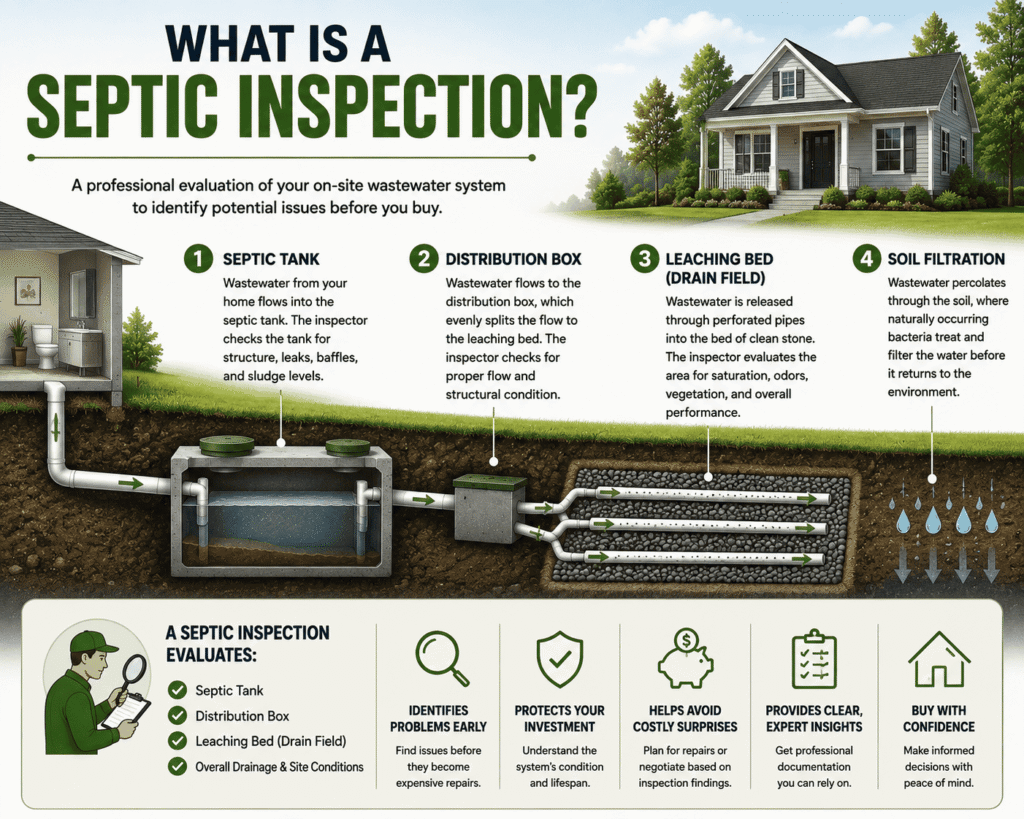
A septic inspection helps you make a more informed purchasing decision by confirming the condition of one of the property’s most expensive and overlooked systems before you buy.
Unlike a roof or furnace, most of a septic system is hidden underground, making it difficult to assess during a regular viewing or standard home inspection. Identifying potential issues before closing allows you to understand the system’s condition, budget for future maintenance, and avoid unexpected surprises after taking ownership.
If problems are discovered, you may also be able to negotiate repairs, request a price adjustment, or reconsider the purchase based on the inspection findings.
A septic inspection evaluates the condition, operation, and accessibility of the property’s septic system to determine whether it is functioning properly and identify any existing or potential problems.
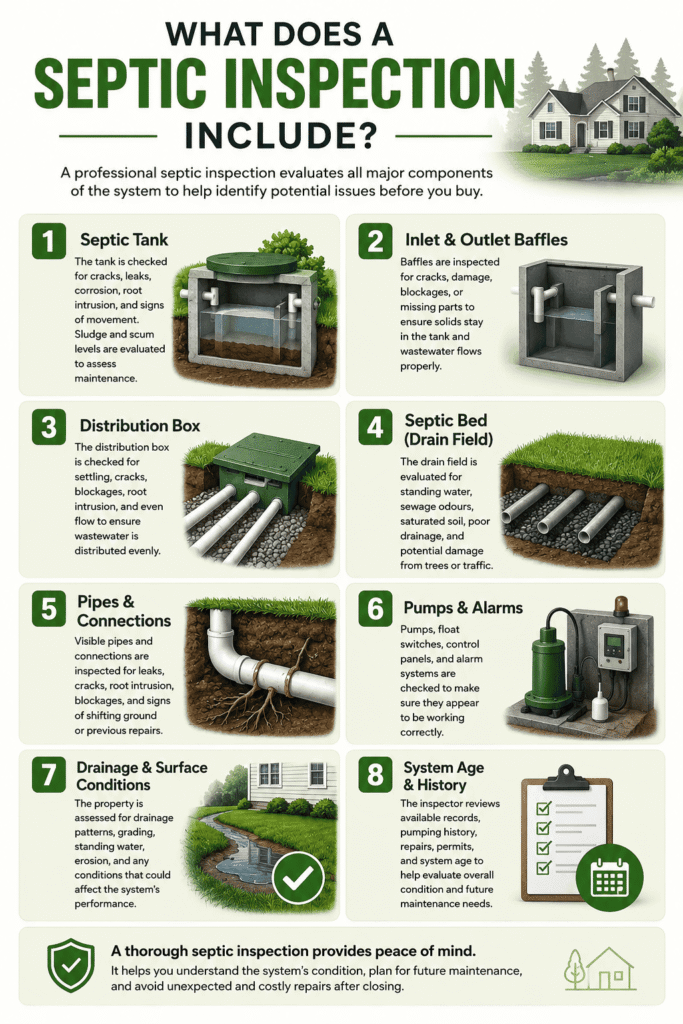
While the exact process may vary depending on the property and inspection type, a professional inspection typically includes assessing the septic tank, distribution components, treatment area, visible piping, pumps, alarms, and the overall condition of the system. The inspector may also review maintenance records, previous repairs, and the age of the system to provide a more complete picture of its performance.
Below are the key components commonly assessed during a septic inspection.
The septic tank is the first component of the system and is responsible for separating wastewater into solids, liquids, and floating scum. During the inspection, the tank is assessed for structural issues such as cracks, leaks, corrosion, root intrusion, or signs of movement. The inspector may also evaluate sludge and scum levels to determine whether the tank has been properly maintained or requires pumping. An aging or damaged septic tank can affect the performance of the entire system and may require repair or replacement.
Inlet and outlet baffles control how wastewater enters and leaves the septic tank. They help keep solids inside the tank while allowing only partially treated wastewater to flow to the septic bed. During the inspection, these components are checked for cracks, deterioration, blockages, or missing sections. Damaged baffles can allow solids to reach the drain field, increasing the risk of clogging, reduced system efficiency, and costly repairs. Because baffles are relatively inexpensive to replace, identifying problems early can help prevent more significant damage.
The distribution box directs wastewater evenly from the septic tank into the treatment area. If wastewater is not distributed properly, parts of the septic bed may become overloaded while others remain underused. During the inspection, the distribution box is examined for settling, cracks, blockages, root intrusion, and uneven flow. A damaged or poorly functioning distribution box can reduce the effectiveness of the entire septic system and may contribute to premature drain field failure if left unaddressed.
The septic bed, also called the leaching bed or drain field, is where treated wastewater is filtered naturally through the soil. Because it is one of the most expensive components to replace, it receives careful attention during the inspection. The inspector will look for signs of standing water, unusually green grass, sewage odours, saturated soil, or poor drainage, all of which may indicate the treatment area is no longer functioning properly. They may also assess whether nearby trees, construction, or heavy vehicle traffic could have affected its performance.
Visible pipes, connections, and accessible plumbing components are inspected for leaks, cracks, root intrusion, blockages, or signs of shifting ground. Even small defects can reduce wastewater flow or place additional stress on the septic system over time. The inspector will also look for evidence of previous repairs or modifications that could affect long-term performance. Catching these issues early often allows for simpler repairs before they develop into larger problems.
Some septic systems rely on pumps to move wastewater from the septic tank to the treatment area, particularly on sloped properties or where gravity alone is insufficient. During the inspection, the pump, float switches, control panel, and alarm system are checked to verify they appear to be operating correctly. Faulty pumps or non-functioning alarms can cause wastewater backups or prevent the system from distributing wastewater properly. Ensuring these components are working as intended helps reduce the risk of unexpected system failures.
The surrounding property is inspected for drainage patterns and surface conditions that could affect the septic system. Excess water from poor grading, roof runoff, or nearby drainage can overload the septic bed and reduce its ability to treat wastewater effectively. Inspectors also look for soil settlement, erosion, tire tracks, or heavy objects placed over the treatment area, as these conditions may damage underground components. Proper drainage around the septic system is essential for reliable long-term performance.
Whenever possible, the inspector will review maintenance records, pumping history, repair documentation, permits, and the approximate age of the system. These records provide valuable insight into how well the septic system has been maintained and whether major components may be nearing the end of their expected lifespan. A system with consistent maintenance and documented service history generally provides greater confidence than one with little or no available information. This history can also help buyers plan for future maintenance or replacement costs.
Suggest Reading: How Often Do Septic Tanks Need To Be Emptied?
A septic inspection can reveal warning signs that may indicate expensive repairs or even a complete system replacement. Identifying these issues before closing gives you the opportunity to negotiate repairs, adjust the purchase price, or make a more informed buying decision.
Below are some of the most common septic warning signs buyers should investigate before purchasing a property.
Missing pumping or repair records makes the system’s condition harder to assess and may indicate inconsistent maintenance.
Wet or pooled areas near the septic bed may signal poor drainage, overloading, or system failure.
Persistent sewage smells may point to leaks, blocked vents, damaged components, or a failing treatment area.
Older systems may still work well, but their age can increase the likelihood of repairs or replacement.
Unapproved repairs may not meet local requirements and could require additional work after purchase.
Soggy soil, lush grass, slow drains, or surfacing wastewater may indicate an expensive drain field problem.
Suggest Reading: 4 Signs of Septic System Failure
Discovering a problem during a septic inspection doesn’t automatically mean you should cancel the purchase. Many septic issues can be repaired or addressed before closing, while others may influence the property’s value or require a different course of action.
The inspection report gives you a clearer understanding of the system’s condition so you can evaluate the potential costs, discuss the findings with the seller, and decide how to proceed. Here are the most common outcomes after a septic inspection.
Not every issue requires a major repair. Problems such as damaged baffles, worn lids, blocked filters, faulty pumps, or small pipe repairs can often be corrected without replacing the entire system. Understanding the scope of the repair helps you determine whether it’s a routine maintenance issue or something that requires further attention.
If the inspection identifies a severely damaged septic tank, a failed treatment area, or multiple aging components, replacing part or all of the septic system may be the most practical long-term solution. While replacement is a larger investment, understanding the condition before purchasing the property allows you to plan accordingly rather than facing an unexpected expense after closing.
A professional septic inspection provides documented findings that can support discussions with the seller. Depending on the results, you may negotiate a lower purchase price, request a credit toward future repairs, or ask the seller to complete the necessary work before the sale is finalized.
Some inspection findings may require further investigation before a final decision can be made. If questions remain about the condition of the treatment area, drainage performance, or specific system components, a more detailed assessment can provide greater clarity and help you better understand the extent of any repairs that may be required.
A septic system is one of the most important—and expensive—parts of a property, yet it’s also one of the easiest to overlook during the home-buying process. A professional septic inspection helps you understand the system’s condition, identify potential problems, and make informed decisions before you finalize your purchase.
If you’re buying a home, cottage, or rural property with a private septic system, Brock Excavation provides professional septic inspections, repairs, maintenance, and installation services throughout Kawartha Lakes and surrounding communities.
Contact our team today to discuss your property or request a free estimate.
Yes. A septic inspection is highly recommended before buying a house with a private septic system. It helps identify hidden issues that may not be found during a standard home inspection and gives you a better understanding of the system's condition before closing.
No. A standard home inspection typically does not include a comprehensive evaluation of the septic system. Because most components are buried underground, a dedicated septic inspection is recommended to properly assess the tank, treatment area, and other key components.
In most cases, the buyer pays for the septic inspection as part of their due diligence. However, the responsibility can vary depending on the purchase agreement or negotiations between the buyer and seller.
Yes, but it's important to understand the extent of the problem before proceeding. Depending on the inspection results, the seller may agree to complete repairs, offer a credit, reduce the purchase price, or you may decide not to proceed with the purchase.
Most septic inspections take between one and three hours, depending on the property's size and the complexity of the system. Larger properties or systems that require additional testing may take longer.
Yes. An older septic system can still pass inspection if it has been properly maintained and is functioning as intended. Age alone does not determine the condition of a septic system, which is why a professional inspection is important.
A septic tank may need to be pumped if sludge levels prevent a thorough inspection or if recommended by the inspector. Pumping can provide better access to the tank and help evaluate its overall condition more accurately.
Ask about the system's age, maintenance history, pumping records, previous repairs, permits, and any known issues. This information, combined with a professional inspection, provides a more complete understanding of the system before you purchase the property.
Get in Touch!
Do you have an excavation, septic, or landscaping project in mind?
Request a quote!