
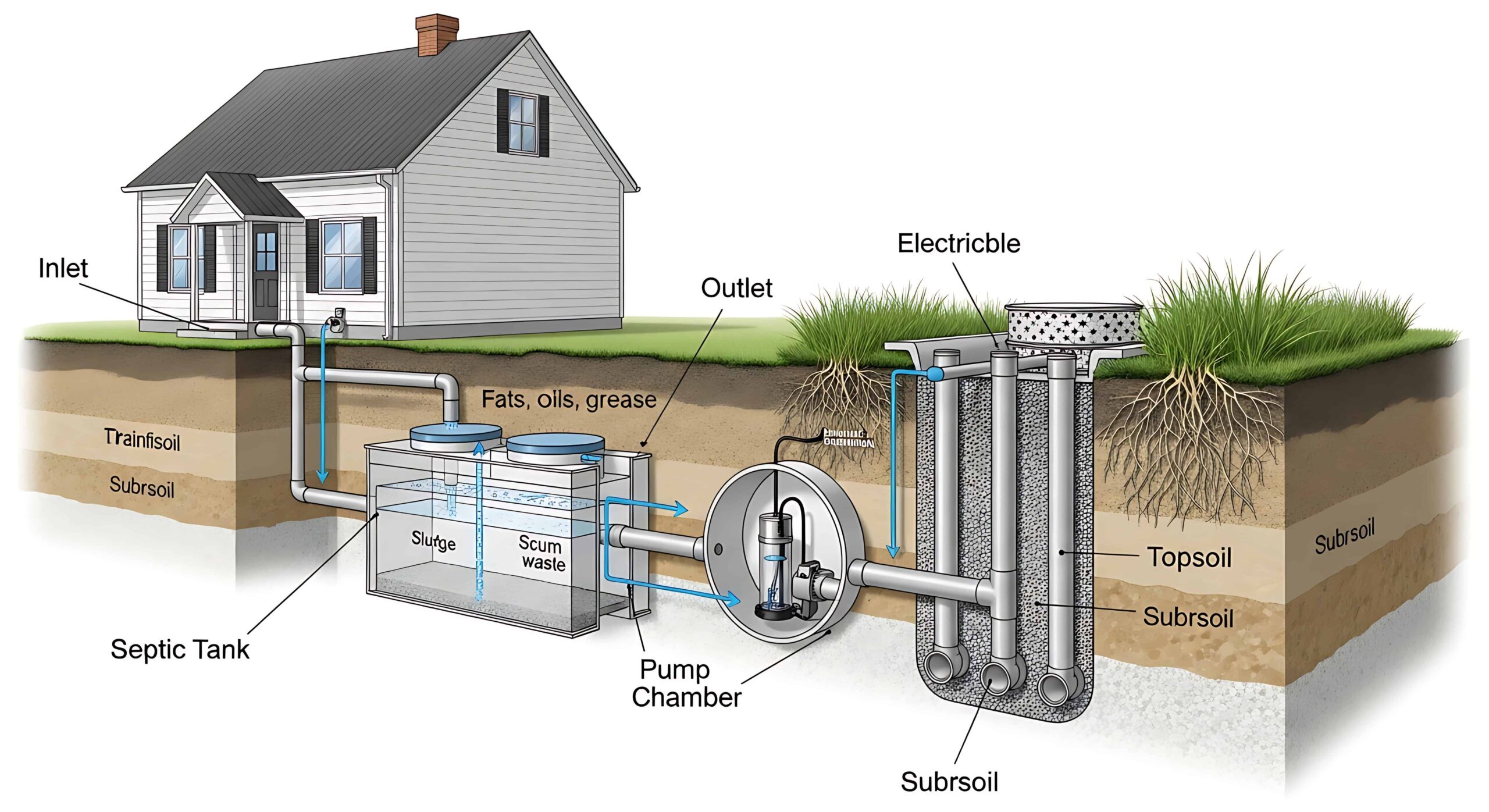
Conventional Septic Systems
A conventional septic system is the most common septic system used for residential properties in Ontario. It typically includes a septic tank and a leaching bed that work together to collect, treat, and disperse wastewater through the soil.
These systems are often selected because they are reliable, cost-effective, and well suited for properties with suitable soil conditions and enough space for a septic bed.
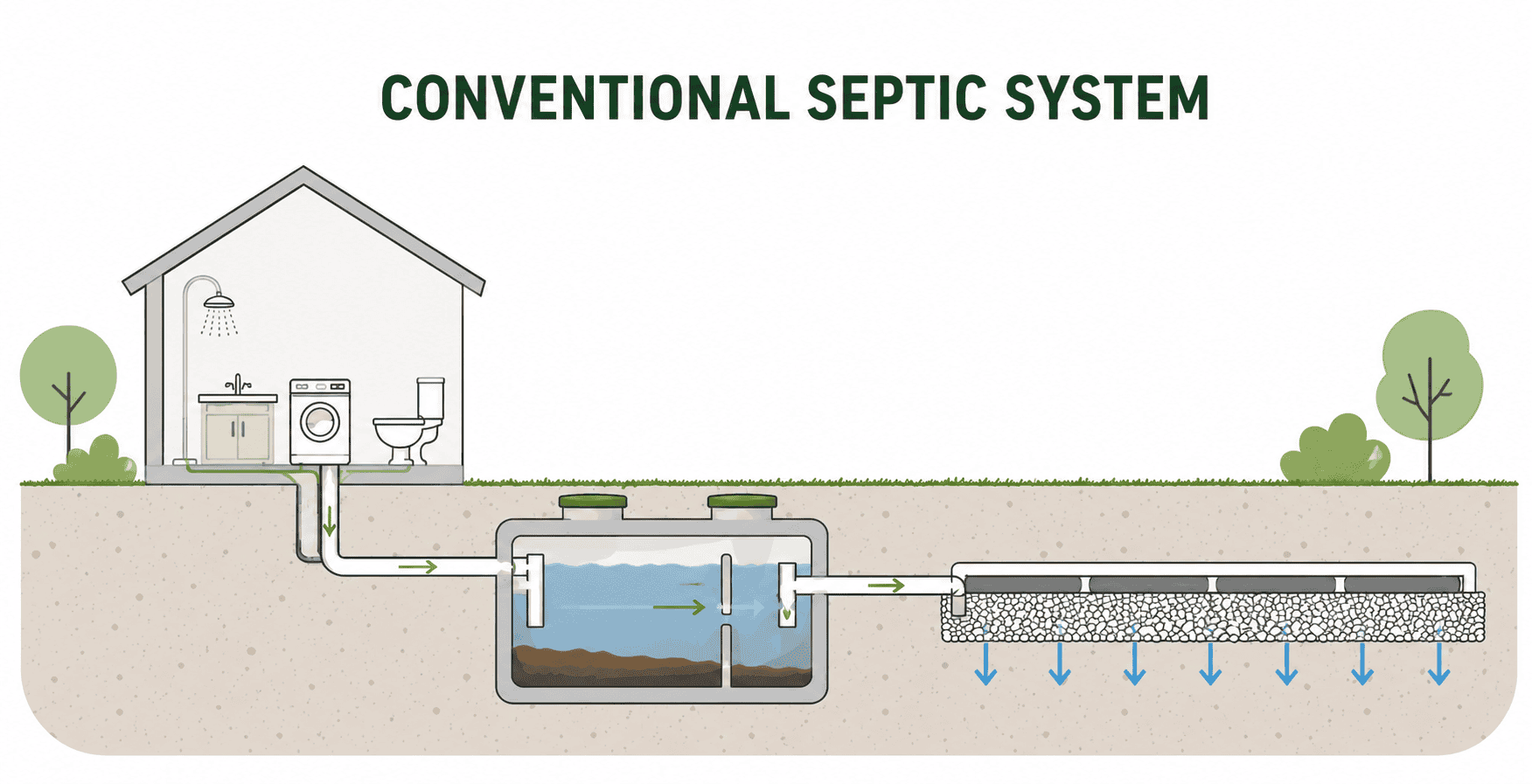
How Conventional Septic Systems Work
Wastewater flows from the home into the septic tank where solids settle and begin breaking down naturally. The partially treated liquid then moves into the distribution system and enters the leaching bed, where surrounding soil provides additional filtration.
When to Use Conventional Septic Systems
- Suitable soil conditions
- Adequate lot size
- Good drainage
- Normal groundwater levels
- Enough space for a leaching bed
Advantages of Conventional Septic Systems
- Lower installation cost compared to advanced systems
- Simple and proven design
- Reliable long-term performance
- Easier maintenance requirements
- Widely used across residential properties
Considerations for Conventional Septic Systems
- May not work well with high groundwater levels
- Requires enough land for a septic bed
- Limited suitability for difficult soil conditions
- Still requires design approval and permits
Conventional Septic System Takeaway
For many homeowners, a conventional septic system remains the preferred choice because it balances performance, simplicity, and cost. However, proper soil testing, site evaluation, and system design are still essential before installation.
Chamber Septic Systems
A chamber septic system is similar to a conventional septic system but uses plastic chambers instead of traditional gravel trenches. These chambers create open space that allows wastewater to move and disperse into the surrounding soil.
Chamber systems are often used when installation flexibility is needed or where reducing gravel use is preferred. They still rely on soil treatment but use a different distribution method.
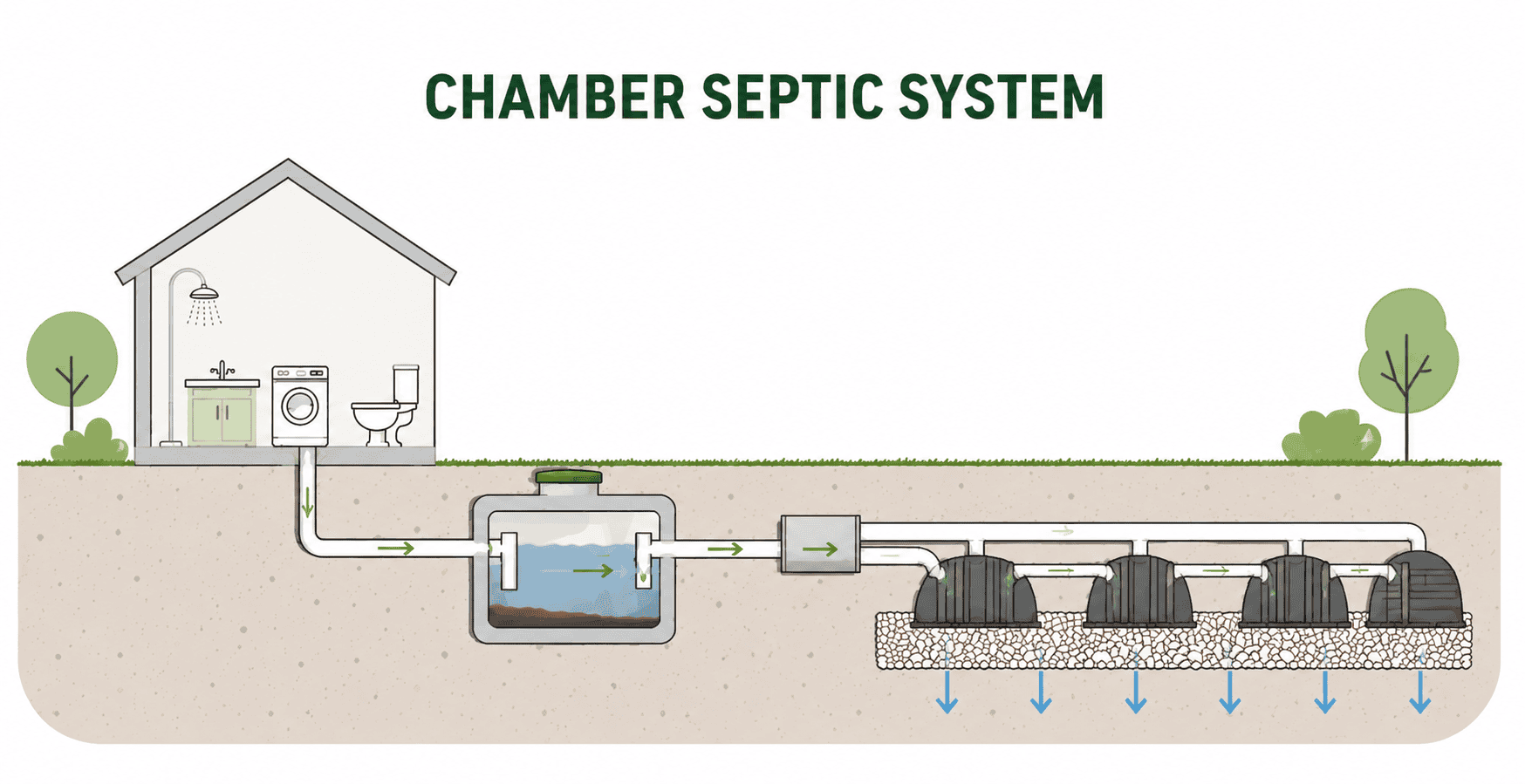
How Chamber Septic Systems Work
Wastewater first enters the septic tank where solids settle and begin breaking down. The liquid wastewater then flows into connected plastic chambers installed below ground. These chambers replace gravel trenches and provide space for wastewater distribution and soil contact.
When to Use Chamber Septic Systems
- Residential lots requiring installation flexibility
- Projects where reduced gravel use is preferred
- New home construction
- Properties with limited access for aggregate delivery
- Suitable soil conditions
Advantages of Chamber Septic Systems
- Uses less gravel during installation
- Can simplify construction in some conditions
- Provides good wastewater distribution
- Flexible layout options
- Often faster to install
Considerations for Chamber Septic Systems
- Still depends on proper soil conditions
- May not solve groundwater limitations
- Requires septic design approval
- Lot size and drainage still matter
Chamber Septic System Takeaway
A chamber septic system can provide similar performance to a conventional system while reducing the need for gravel trenches. For some properties, it offers added installation flexibility without changing how the system functions overall.
Mound Septic Systems
A mound septic system is used when the natural soil conditions on a property are not suitable for a traditional underground leaching bed. Instead of placing the treatment area fully below ground, a mound system uses a raised engineered bed to treat and disperse wastewater.
These systems are often selected for properties with high groundwater, shallow soil, poor drainage, or bedrock close to the surface. While they are more complex than conventional systems, they can make septic installation possible on challenging sites.
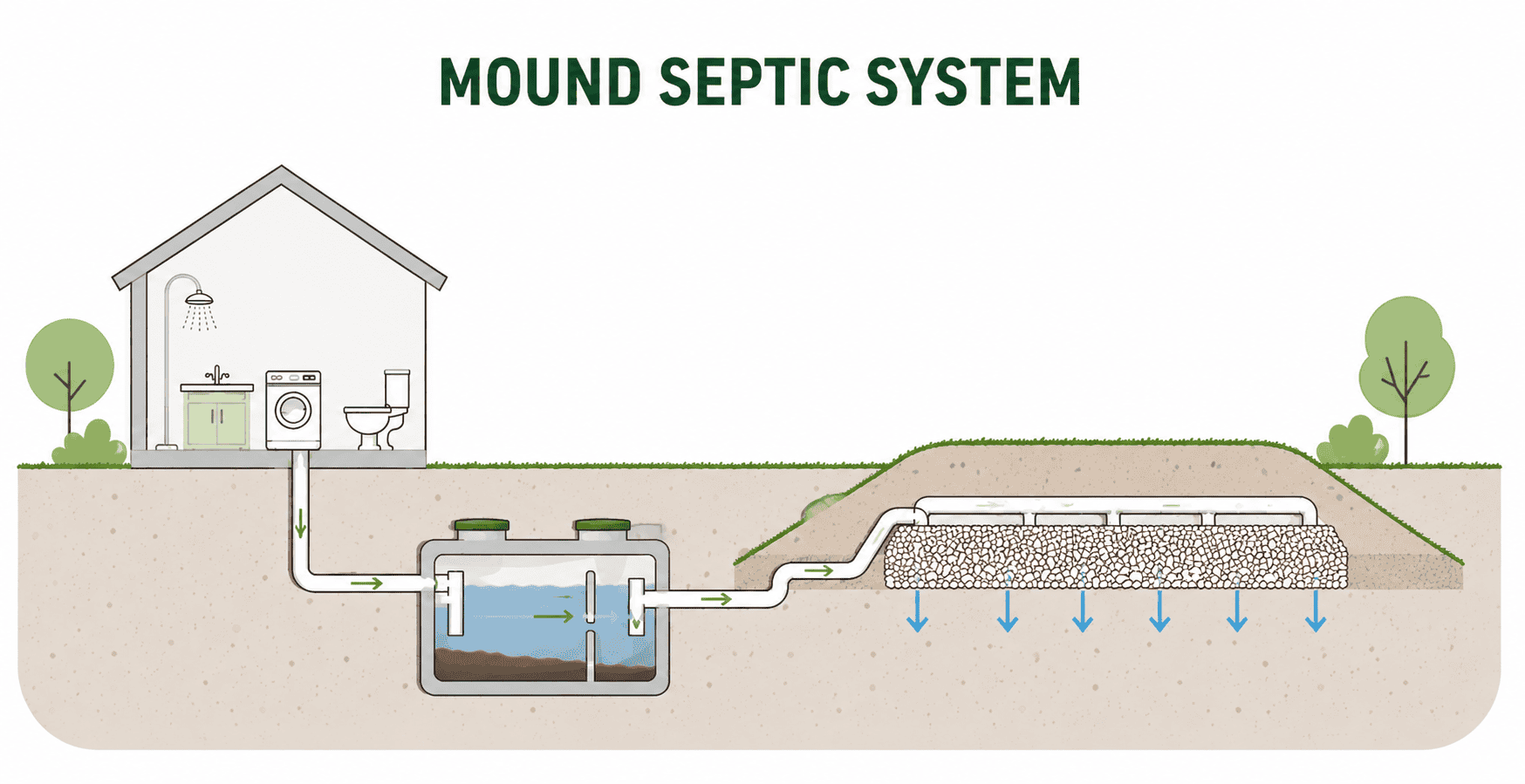
How Mound Septic Systems Work
Wastewater flows from the home into the septic tank, where solids settle and begin breaking down. The liquid wastewater then moves to a pump chamber, which pushes wastewater into a raised mound made from engineered sand and soil. The mound acts as the treatment area.
When to Use Mound Septic Systems
- High groundwater levels
- Shallow soil depth
- Bedrock close to the surface
- Poor natural drainage
- Limited suitability for a conventional septic bed
Advantages of Mound Septic Systems
- Makes septic installation possible on difficult sites
- Provides added treatment separation
- Helps protect groundwater
- Useful for shallow soil or high water tables
- Can support homes where conventional systems are not suitable
Considerations for Mound Septic Systems
- Usually more expensive than conventional systems
- Requires a pump chamber and electrical components
- More visible on the property
- Requires careful design and installation
- May need more maintenance than simpler systems
Mound Septic System Takeaway
A mound septic system is often a practical solution for properties where conventional septic systems are not suitable. It may cost more and require additional planning, but it can provide reliable wastewater treatment on sites with challenging soil or groundwater conditions.
Aerobic Treatment Units
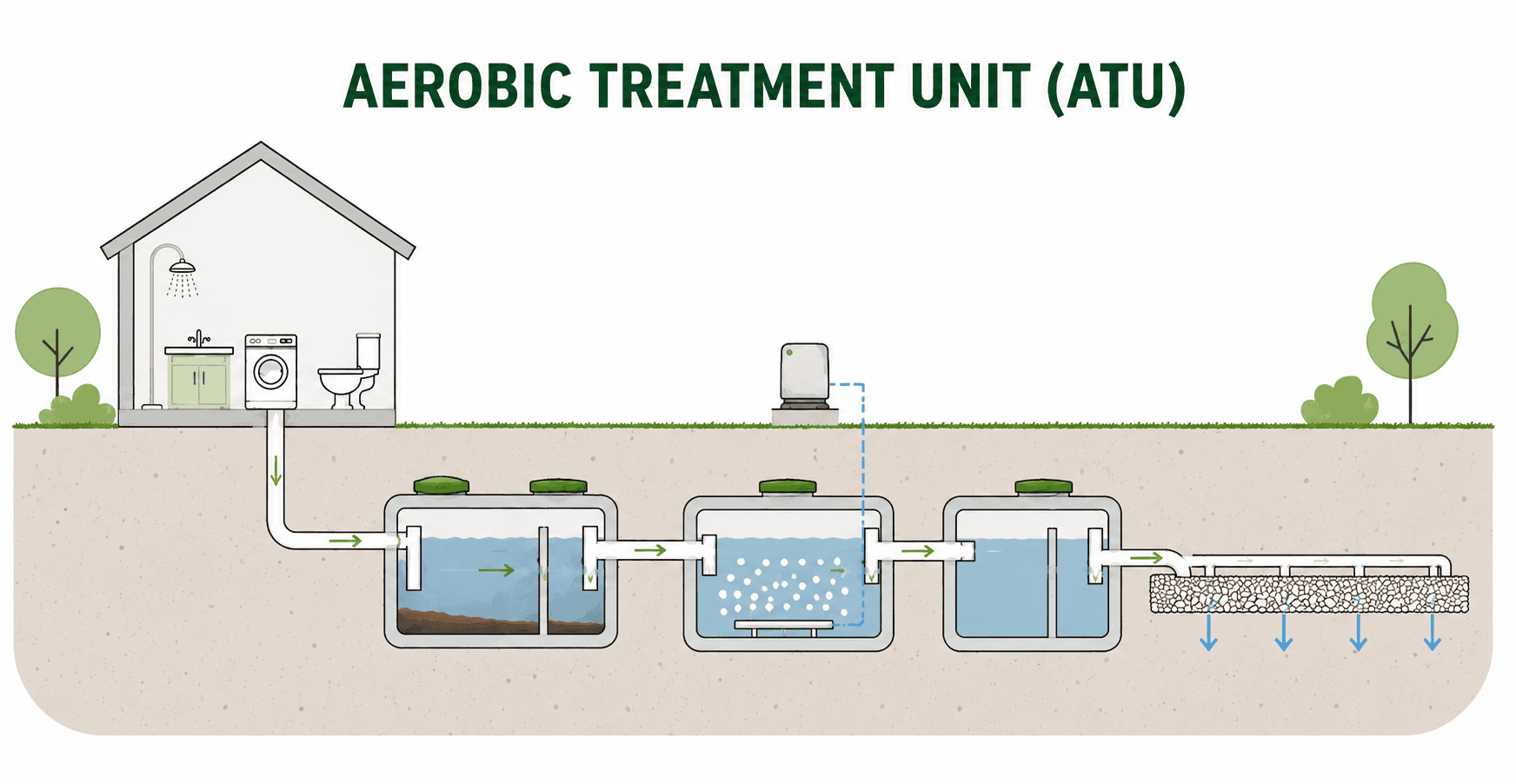
An aerobic treatment unit, often called an ATU, is a septic system that uses oxygen to help break down wastewater more efficiently. Unlike a conventional septic tank, an ATU introduces air into the treatment process to support aerobic bacteria.
These systems are often used when a property needs a higher level of wastewater treatment or where site conditions make a standard septic system more difficult to use.
How Aerobic Treatment Units Work
Wastewater enters the treatment unit where air is added to the system. This oxygen supports aerobic bacteria, which help break down waste more quickly and produce cleaner effluent before wastewater reaches the final dispersal area.
When to Use Aerobic Treatment Units
- Limited space for a traditional septic bed
- Stricter treatment requirements
- Challenging soil conditions
- Environmentally sensitive surroundings
- Need for higher-quality wastewater treatment
Advantages of Aerobic Treatment Units
- Provides a higher level of wastewater treatment
- Can be useful on difficult properties
- May require less dispersal space in some designs
- Produces cleaner effluent than standard septic tanks
- Useful for environmentally sensitive sites
Considerations for Aerobic Treatment Units
- Requires electricity to operate
- Has mechanical parts that need servicing
- Usually costs more than a conventional system
- Requires more regular maintenance
Aerobic Treatment Unit Takeaway
Aerobic treatment units can be a strong option when a property needs improved wastewater treatment, but they require more maintenance and mechanical support than a conventional septic system.
Sand Filter Systems
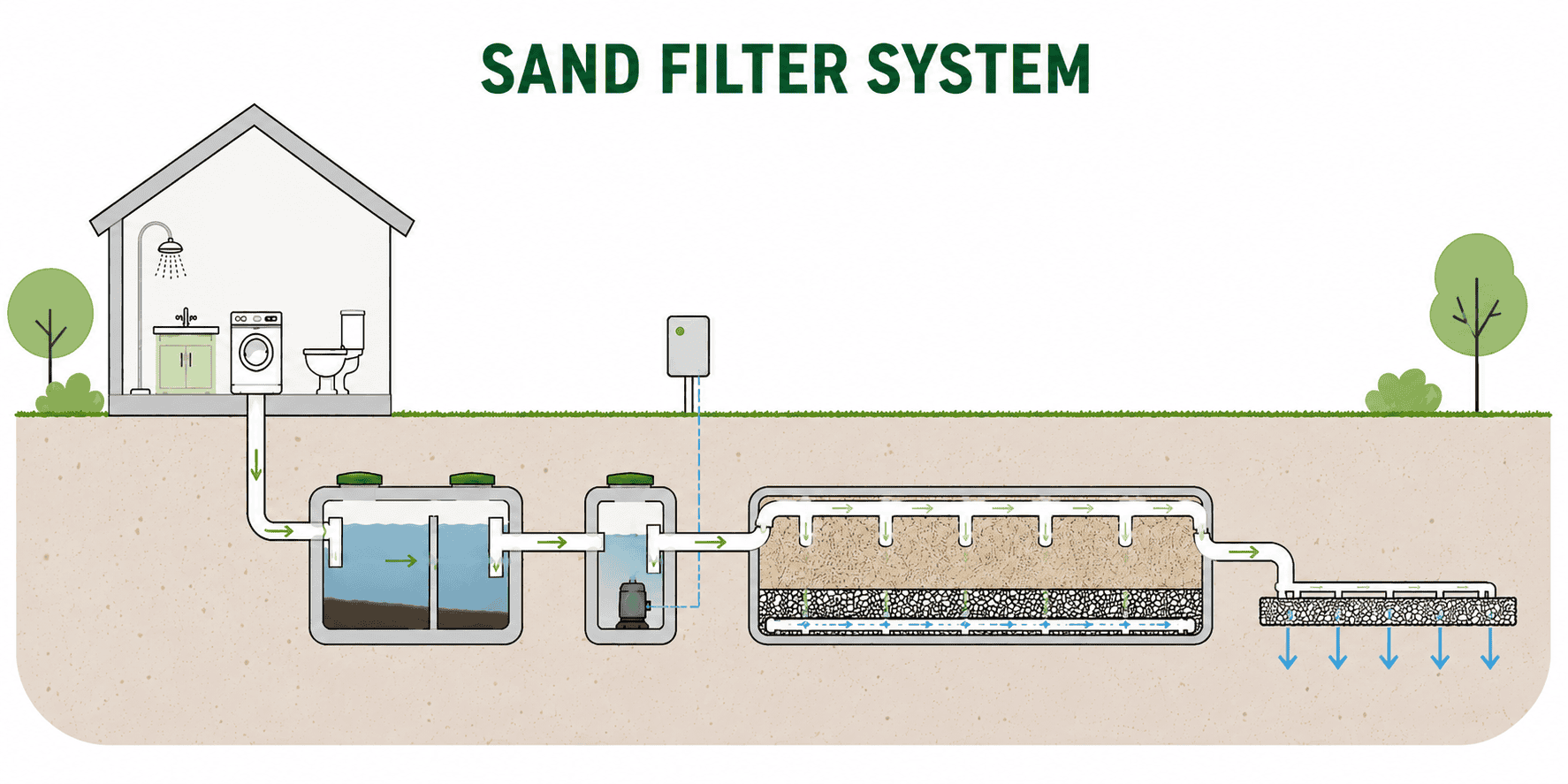
A sand filter septic system uses a layer of engineered sand to provide additional wastewater treatment before the water moves into the final dispersal area. The sand acts as a filtration layer, helping improve treatment when natural soil conditions alone may not be enough.
These systems are often used when a property needs better filtration or when site conditions require an added treatment step before wastewater reaches the soil.
How Sand Filter Septic Systems Work
Wastewater first enters the septic tank, where solids settle and begin breaking down. The liquid wastewater then moves through a sand filter, where engineered sand helps remove contaminants and improve treatment quality before final dispersal.
When to Use Sand Filter Septic Systems
- Limited natural soil treatment capacity
- Need for improved wastewater filtration
- Challenging drainage conditions
- Environmental sensitivity
- Site conditions that require added treatment
Advantages of Sand Filter Septic Systems
- Provides additional wastewater filtration
- Improves treatment quality before dispersal
- Can be useful for difficult site conditions
- Helps reduce reliance on natural soil treatment alone
- Can support properties with stricter treatment needs
Considerations for Sand Filter Septic Systems
- Usually more complex than conventional systems
- May require pumps or additional components
- Can cost more to install
- Requires proper design and ongoing maintenance
- Needs enough space for the filter and dispersal area
Sand Filter Septic System Takeaway
A sand filter septic system can be a good option when a property needs added wastewater treatment. It provides more filtration than a basic system, but it also requires careful design, proper installation, and regular maintenance.
Advanced Treatment Systems
Advanced treatment systems are designed for properties where a standard septic system may not provide enough treatment or where environmental conditions require a higher level of wastewater processing.
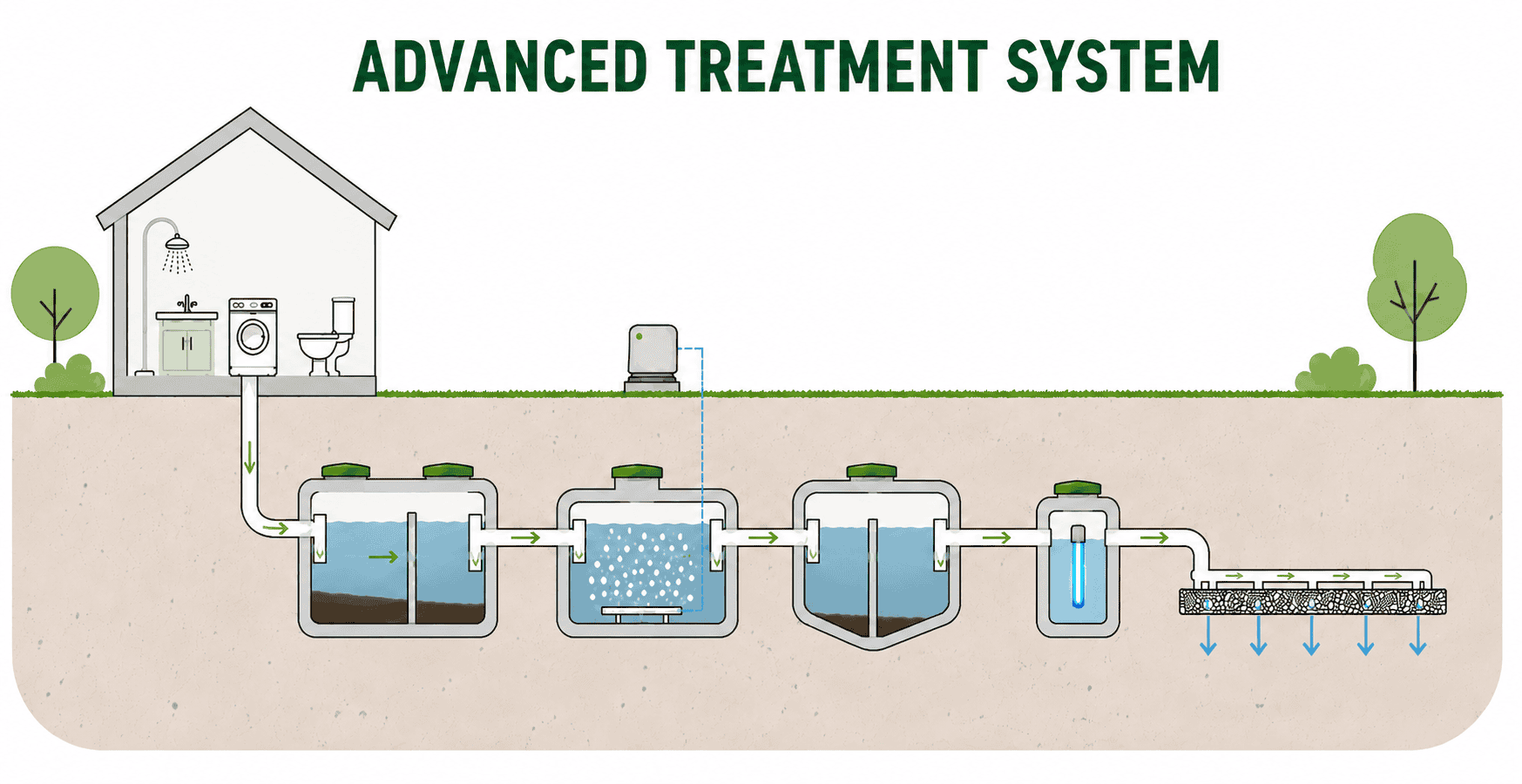
These systems use additional treatment stages, filters, media, or biological processes to improve wastewater quality before it reaches the final dispersal area. They are often used on difficult sites, environmentally sensitive properties, or locations with stricter treatment requirements.
How Advanced Treatment Systems Work
Wastewater enters the septic tank where initial settling takes place. After that, it moves through additional treatment stages such as filters, specialized media, biological treatment processes, pumps, or enhanced filtration systems.
When to Use Advanced Treatment Systems
- Environmentally sensitive locations
- Waterfront properties
- Small lots with limited installation space
- Difficult soil conditions
- Higher treatment requirements
- Sites where conventional systems are not suitable
Advantages of Advanced Treatment Systems
- Provides higher treatment performance
- Can work on difficult or restricted sites
- Useful for environmentally sensitive areas
- May support installations on smaller properties
- Offers more flexibility for challenging conditions
Considerations for Advanced Treatment Systems
- Usually more expensive than conventional systems
- Requires professional design and installation
- May include pumps and mechanical equipment
- Needs ongoing maintenance and servicing
- System requirements vary depending on design
Advanced Treatment System Takeaway
Advanced treatment systems are often used when site conditions, environmental concerns, or property limitations make traditional septic systems difficult. They provide more treatment capability, but usually involve higher costs and more maintenance.
Holding Tanks
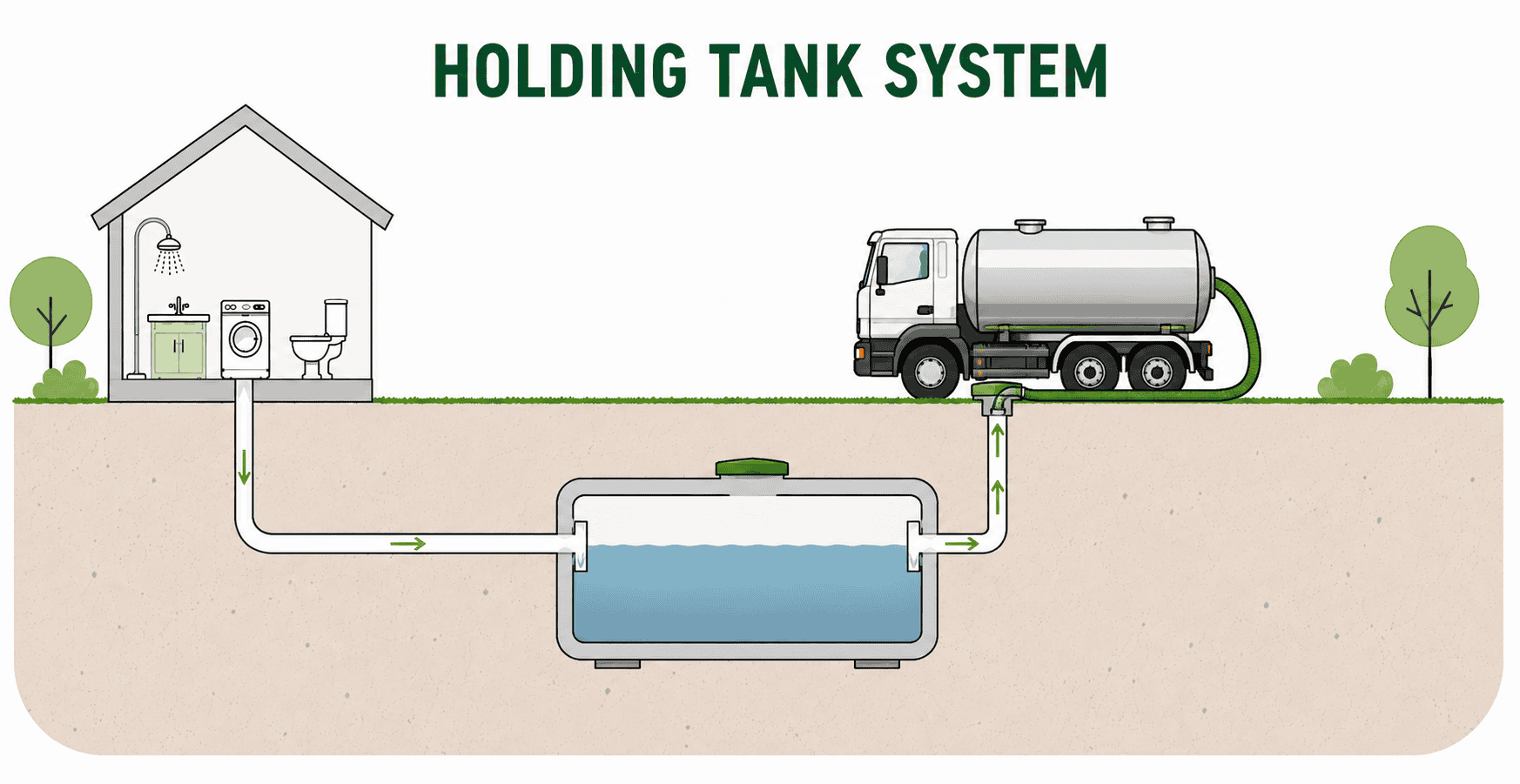
A holding tank is different from a traditional septic system because it stores wastewater instead of treating and dispersing it through a septic bed. Wastewater remains inside the tank until it is pumped and removed by a licensed service provider.
Holding tanks are usually considered when a property cannot support a conventional or advanced septic system, or when a temporary or seasonal wastewater solution is needed.
How Holding Tanks Work
All wastewater from the home flows into a sealed tank. Unlike other septic systems, there is no leaching bed or final treatment area. Once the tank fills, it must be pumped out and emptied.
When to Use Holding Tanks
- Seasonal cottages
- Temporary buildings
- Properties with major site limitations
- Lots where treatment systems are not feasible
- Short-term wastewater storage needs
Advantages of Holding Tanks
- Can work where treatment systems are not possible
- Simple storage-based setup
- Useful for seasonal or limited-use properties
- Requires less land than a septic bed
Considerations for Holding Tanks
- Requires frequent pumping
- Does not treat wastewater
- Can have higher long-term operating costs
- Not ideal for high-use properties
- Needs careful monitoring to avoid overflow
Holding Tank Takeaway
A holding tank may solve certain site limitations, but it is not the same as a full septic system. Because it only stores wastewater, homeowners need to plan for regular pumping and ongoing service costs.