
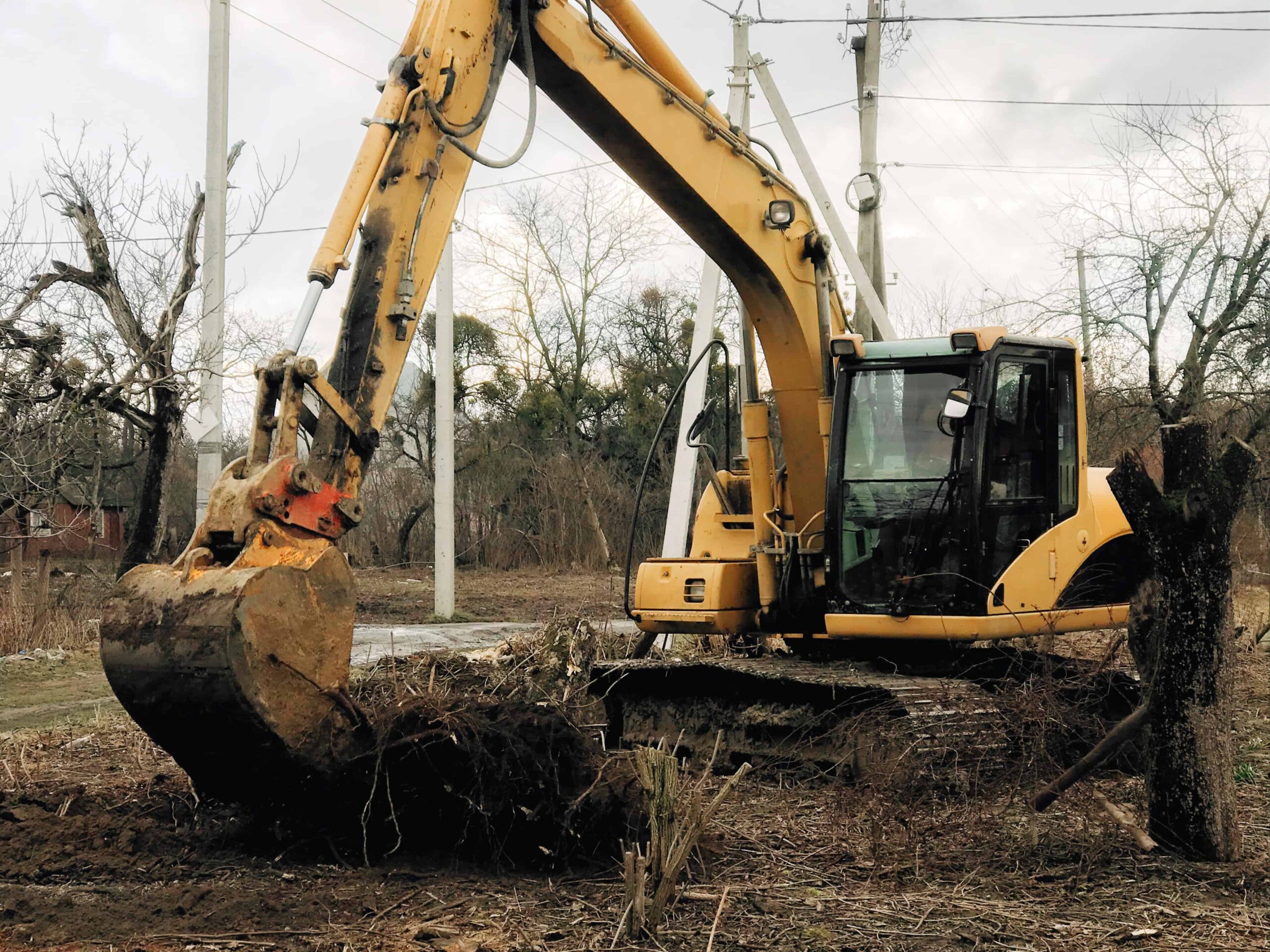
Land Clearing Services: Everything You Need to Know
Preparing a property for construction involves more than removing a few trees. Professional land clearing removes trees, brush, stumps, rocks, and other obstacles to create a safe, accessible, and build-ready site.
Whether you’re preparing a residential lot, farmland, waterfront property, or commercial site, understanding the process can help you plan effectively. In this guide, we’ll explain what land clearing includes, when it’s needed, the equipment used, key cost factors, and how to choose the right contractor.
What Are Land Clearing Services?
Land clearing services involve removing trees, brush, stumps, rocks, and other vegetation from a property to prepare it for construction, development, farming, or other intended uses.
While many people think land clearing simply means cutting down trees, a professional land clearing project involves much more.
The objective is to prepare the property so it is safe, accessible, and suitable for whatever comes next, whether that’s building a new home, installing a septic system, creating an access road, expanding agricultural land, or developing a commercial site.
When completed properly, land clearing creates a clean foundation that allows excavation, grading, utility installation, septic work, and construction to proceed safely and efficiently.
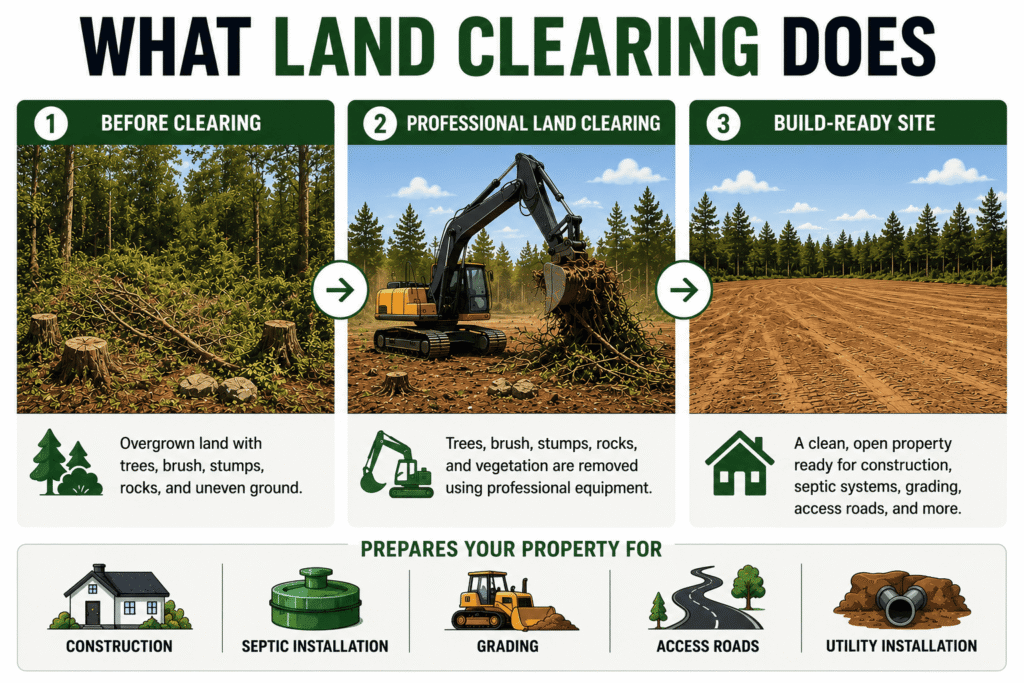
What Do Land Clearing Services Include?
Land clearing services typically include removing trees, brush, stumps, rocks, and other obstacles while preparing a property for construction, development, agriculture, or other intended uses. The exact scope of work depends on the property’s size, terrain, vegetation, and future plans.
A professional land clearing contractor evaluates the property and determines the most effective way to clear the land while preserving important features, maintaining proper drainage, and creating safe access for future work.
Depending on your project, a land clearing service may include:
Tree & Brush Removal
Trees, shrubs, overgrown vegetation, and underbrush are removed to create a clean, accessible site. The amount of clearing can vary from selective tree removal to clearing an entire lot for new construction.
- Prepare lots for new construction
- Improve site access for equipment
- Remove overgrown or hazardous vegetation
Stump Removal
Leaving stumps behind can interfere with excavation, foundations, driveways, septic systems, and landscaping. Removing them also helps prevent future settling, pest issues, and unwanted regrowth.
- Eliminate obstacles before construction
- Prevent future root regrowth
- Create a level, usable building site
Rock & Debris Removal
Large rocks, fallen trees, construction debris, and other obstacles are cleared from the site to improve safety and provide a stable surface for construction equipment.
- Improve job site safety
- Protect excavation equipment
- Prepare the property for grading
Site Cleanup
After clearing, vegetation and debris are either hauled away, chipped into mulch, or processed according to the project’s requirements and local regulations, leaving the property clean and ready for the next stage.
- Remove excess vegetation and debris
- Leave a clean, build-ready property
- Prepare for excavation or construction
Rough Grading & Site Preparation
Many land clearing projects also include rough grading to create a more level, stable surface and improve site accessibility before excavation, septic installation, utility work, or construction begins.
- Establish proper site elevations
- Improve drainage and water runoff
- Prepare for foundations and utilities
When Do You Need Land Clearing Services?
Whether you’re starting a new construction project or reclaiming overgrown land, proper site preparation ensures the next phase can begin safely and efficiently.
Not every property requires complete clearing. Some projects only need selective tree removal, while others involve preparing an entire site for development. An experienced land clearing contractor can assess your property and recommend the most practical approach based on your goals, terrain, and site conditions.
Below are some of the most common situations where professional land clearing is required.
New Home Construction
Land clearing removes trees, brush, stumps, and other obstacles before excavation, foundation work, utilities, and home construction begin. It creates a safer and more accessible site for equipment and contractors.
Septic System Installation
Septic projects need adequate space for the tank, treatment area, excavation equipment, and future maintenance access. Clearing the site early helps the installation follow the approved septic design.
Commercial Development
Commercial properties often require clearing before buildings, parking areas, drainage systems, utilities, and access routes can be constructed. Proper clearing creates a reliable starting point for development.
Agricultural Projects
Land clearing can reclaim overgrown fields, open fence lines, improve farm access, and prepare areas for barns, storage buildings, drainage improvements, or expanded agricultural use.
Rural & Waterfront Properties
Selective clearing can prepare building sites, improve views, establish access, and create outdoor spaces on wooded, rural, or waterfront properties while accounting for terrain and drainage.
Access Roads & Driveways
Removing trees, brush, roots, and other obstacles helps establish safe routes for vehicles, construction crews, and heavy equipment before excavation, drainage work, base preparation, and grading.
What Equipment Is Used for Land Clearing?
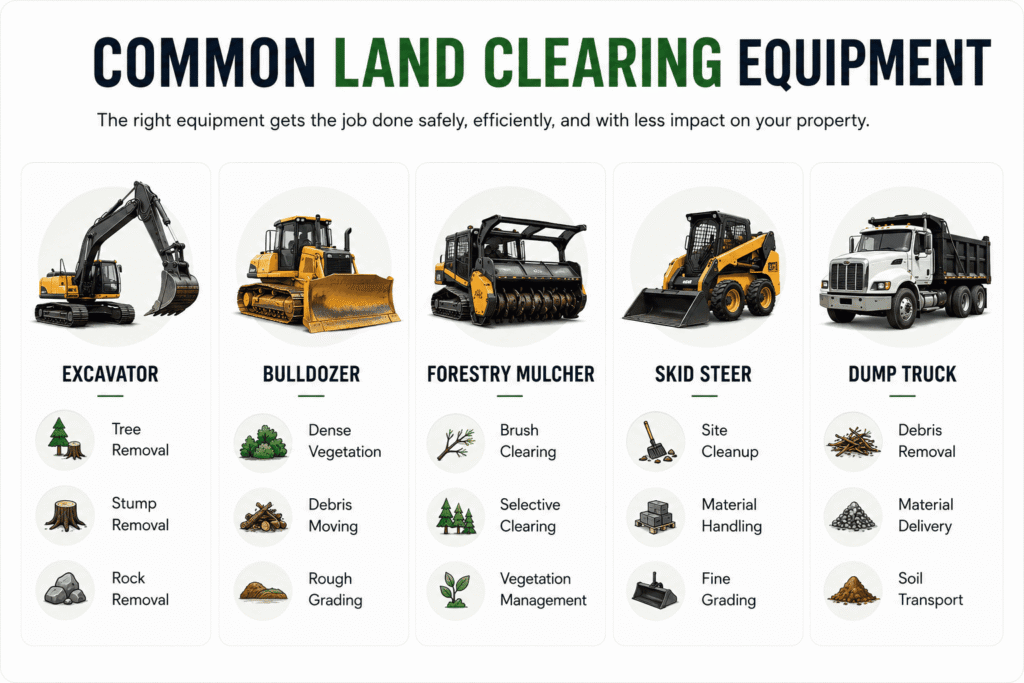
Professional land clearing projects use a variety of heavy equipment depending on the property’s size, terrain, vegetation, and the scope of work. Each machine serves a specific purpose to complete the job safely and efficiently while minimizing unnecessary disturbance to the site.
The right equipment not only improves productivity but also helps protect the surrounding landscape, reduces manual labour, and prepares the property for the next stage of development. Below are some of the most common machines used during land clearing projects.
Excavators
Excavators are one of the most versatile machines used in land clearing. They can remove trees and stumps, move rocks, load debris, and support excavation once the site has been cleared. Common use cases includes:
Bulldozers
Bulldozers are used to push large amounts of brush, soil, and debris across a site. They are especially useful for clearing dense vegetation and beginning rough grading on larger properties. Common use cases includes:
Forestry Mulchers
Forestry mulchers grind trees, brush, and vegetation into mulch that can remain on the property. This can reduce hauling and limit soil disturbance on suitable sites. Common use cases includes:
Skid Steers
Skid steers are compact, manoeuvrable machines that work well on smaller sites or properties with limited access. Different attachments allow them to handle cleanup, material movement, and grading. Common use cases includes:
Dump Trucks
Dump trucks remove brush, stumps, rocks, and other debris from the site while also delivering soil, gravel, and aggregate needed for the next stage of the project. Common use cases includes:
What Factors Affect the Cost of Land Clearing?
The cost of land clearing depends on the property’s size, vegetation density, terrain, accessibility, and the amount of work required to prepare the site. Every project is unique, so the final cost is based on the specific conditions of your property rather than a standard price per acre.
Before providing a quote, a professional land clearing contractor will assess the site to determine the safest and most efficient approach. Understanding the factors below can help explain why one project may require more time, equipment, or labour than another.
Property Size
Larger properties generally require more time, labour, and equipment than smaller residential lots. However, size alone does not determine the complexity of the project. A smaller lot with difficult access or dense vegetation may require more work than a larger, open property.
Tree & Vegetation Density
A lightly wooded property can usually be cleared more quickly than a site with mature trees, dense brush, heavy undergrowth, or extensive root systems. The type, size, and number of trees can all affect the equipment and time required.
Terrain & Ground Conditions
Steep slopes, uneven ground, rocky terrain, wetlands, and poor soil conditions can make clearing more complex. These conditions may require specialized equipment, additional safety planning, or more site preparation before work can proceed.
Site Accessibility
Limited access points, narrow driveways, nearby buildings, overhead lines, or existing structures can restrict the size and type of equipment that can safely reach the work area. Easier access generally allows the project to move more efficiently.
Stump & Rock Removal
Removing large stumps, deep root systems, buried rocks, and other underground obstacles adds more excavation and handling work than clearing surface vegetation alone. The material may also need to be moved, stockpiled, or hauled away.
Debris Disposal
Trees, brush, stumps, and other material may be chipped, hauled away, stockpiled, processed on-site, or managed according to local requirements. The volume of debris and the chosen disposal method can significantly affect the overall scope of work.
Permits & Environmental Requirements
Some properties may require municipal permits, conservation authority approval, tree protection measures, erosion controls, or other environmental considerations before clearing begins. These requirements can affect planning, scheduling, and project costs.
Future Site Plans
The intended use of the property determines how much clearing and preparation is required. A site being prepared for a new home, septic system, commercial building, driveway, or agricultural use may need different levels of clearing, grading, and access preparation.
How to Choose the Right Land Clearing Contractor
Choosing the right land clearing contractor is just as important as choosing the right equipment. An experienced contractor will safely prepare your property while helping prevent delays, unexpected costs, and problems that could affect the rest of your project.
Not all land clearing companies offer the same level of experience or services. Before hiring a contractor, it’s worth asking a few key questions to ensure they’re equipped for your specific project and understand your long-term goals for the property.
Instead of cards or toggles, I’d make this an elegant checklist.
What to Look For:
✓ Experience with projects similar to yours
✓ Properly maintained heavy equipment
✓ Licensed and insured contractor
✓ Understanding of local regulations and permits
✓ Ability to handle complete site preparation; not just tree removal
✓ Clear communication and detailed estimates
✓ Safe work practices and respect for surrounding property
✓ Positive reputation and local references
Ready to Prepare Your Property?
Whether you’re preparing a residential lot, clearing land for a septic system, developing a commercial property, or reclaiming overgrown acreage, proper land clearing is the foundation of a successful project. Working with an experienced contractor helps ensure your property is cleared safely, efficiently, and according to your long-term plans.
At Brock Excavation, we provide professional land clearing services throughout Eastern Ontario, using modern equipment and experienced operators to prepare sites for excavation, construction, and development. Contact our team today to discuss your project and request a free estimate.
Frequently Asked Questions
What is the purpose of land clearing?
The purpose of land clearing is to remove trees, brush, stumps, rocks, and other obstacles so a property can be safely used for construction, agriculture, or other improvements. Proper land clearing creates a clean, accessible site for excavation, septic systems, driveways, utilities, and landscaping while improving safety and site preparation.
Do I need a permit for land clearing?
It depends on your property's location and the scope of the work. Some land clearing projects require permits or approval from local municipalities or conservation authorities. Requirements vary depending on protected trees, environmentally sensitive areas, and local regulations, so it's always best to confirm before work begins.
How long does a land clearing project take?
The timeline depends on the property's size, vegetation density, terrain, accessibility, and the amount of work involved. While smaller residential projects may take only a day or two, larger or heavily wooded sites can take considerably longer depending on site conditions and weather.
Can land clearing improve drainage?
Yes. Land clearing can improve drainage when combined with proper grading and site preparation. Clearing the land allows contractors to reshape the site, establish proper slopes, and prepare for drainage systems that help direct water away from buildings and other structures.
Is stump removal included with land clearing?
Not always. While many land clearing projects include stump removal, the exact scope depends on your project and future plans for the property. Stump removal is often recommended before construction, septic installation, driveways, or landscaping to prevent future settling and root regrowth.
What happens to the trees and debris after land clearing?
Trees, brush, and other debris can be hauled away, chipped into mulch, stockpiled, or processed on-site depending on the project requirements and local regulations. Your contractor can recommend the most practical disposal method for your property.
Can land clearing be done in the winter?
Yes. Land clearing can often be completed during the winter if weather and site conditions allow equipment to operate safely. Frozen ground may even reduce soil disturbance in some situations, although heavy snow and limited access can affect scheduling.
Should land clearing be completed before excavation?
Yes. In most cases, land clearing is completed before excavation begins. Removing trees, brush, stumps, rocks, and other obstacles creates a safe, accessible work area and helps excavation, utility installation, septic work, and construction proceed more efficiently.
Get in Touch!
Do you have an excavation, septic, or landscaping project in mind?
Request a quote!